
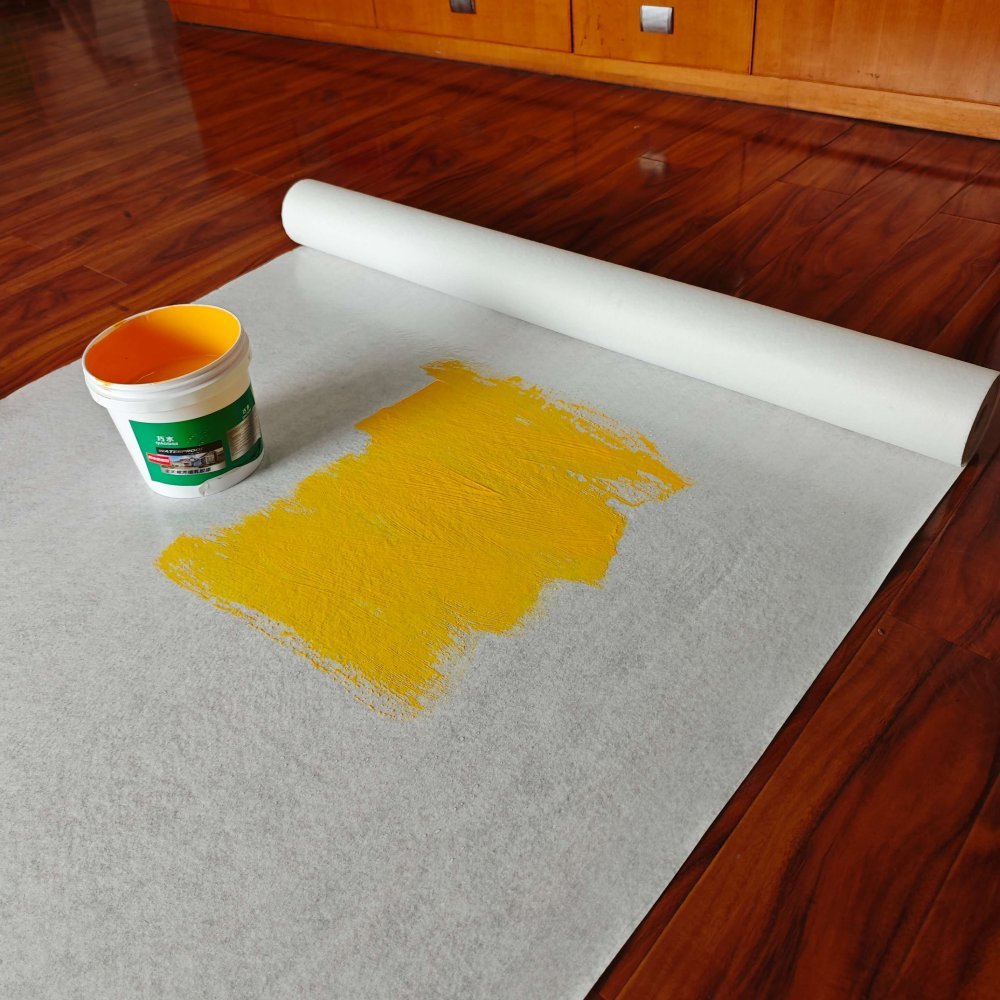
For renovation contractors and bulk distributors, the quality of temporary self-adhesive floor protection film directly impacts construction safety, floor protection results and project credibility. Low-quality temporary floor film commonly has flaws including uneven thickness, adhesive residue, inaccurate dimensions, poor air permeability and stiff paving performance. These issues easily cause floor scratches, paint stains and extra after-sales costs. This professional quality inspection guide covers all core checkpoints to help you verify qualified construction-grade self-adhesive floor protection film for temporary renovation use.
1. Adhesive Residue Inspection (No Residue Performance Test)
Adhesive residue is the top concern for users ofself-adhesive temporary floor protection film. Low-grade adhesive formulas often leave stubborn sticky residues or damage floor paint after long-time lamination, causing extra cleaning and repair work.
The standard inspection method is to apply the self-adhesive film on hardwood, tile and vinyl floors for 48 to 72 hours under normal ambient conditions. Slowly peel off the film at a steady speed. Qualified temporary floor film delivers zero residual glue, no sticky spots and no floor peeling. Any leftover glue, surface stickiness or floor discoloration indicates unqualified products unsuitable for high-end renovations.
2. Dimension Accuracy Inspection: Length & Width Tolerance Check
Inaccurate length and width are typical batch defects of mass-produced temporary floor protection film. Unstandardized sizes lead to messy splicing, incomplete coverage and material waste during construction, lowering overall paving efficiency.
Randomly sample multiple rolls per batch for full-size measurement. Qualified self-adhesive floor film controls width tolerance within ±0.5cm and length tolerance within ±1%. Consistent roll dimensions ensure neat construction layout. Deviations in size usually reveal cost-cutting production flaws, failing engineering temporary protection standards.
3. Gram Weight (GSM) Consistency Inspection
Average Gram Weight (GSM) is a core standard to judge the material dosage and overall durability of temporary self-adhesive floor protection film, especially for felt-backed floor film. Different from pure PE film, needle-punched felt material naturally has slight uneven gram weight across the surface, which is a normal physical feature of the fabric structure. Therefore, testing average gram weight is the most accurate and reasonable inspection method for felt floor protection film, rather than judging quality by single-point GSM data. Stable average gram weight ensures overall compression resistance and wear resistance of the whole roll of film, avoiding cost-cutting issues with insufficient raw material dosage.
The standard inspection method is to calculate the average gram weight of the entire roll: weigh the total weight of some whole film rolls, then divide the total weight by the total length (meters) to get the average weight per meter, and further convert to the average square meter gram weight. This overall averaging calculation can effectively avoid detection errors caused by the natural uneven density of needle-punched felt. Qualified temporary self-adhesive floor film has stable average GSM that fully meets order standards, ensuring consistent overall protection performance of each roll for renovation projects.
4. Air Permeability Performance Inspection
Air permeability is essential for temporary floor protection film used on moisture-sensitive hardwood floors. Zero-permeability film traps moisture between the floor and film layer during long-term coverage, causing mildew, bulging and paint peeling in humid environments.
High-quality self-adhesive composite film balances waterproof performance and micro-air permeability. Conduct a simple ventilation test to check air circulation. Standard products release residual floor moisture to avoid mold, while blocking liquid paint and water penetration. Non-breathable film is only fit for short-term tile protection, not long-term hardwood temporary coverage.
5. Paving Smoothness Test (Easy-to-Spread Performance)
Premium self-adhesive temporary floor protection film must be easy to spread and flatten smoothly. Inferior film has uneven tension, causing edge curling and self-sticking during paving, which slows down construction progress.
Simulate real construction paving: unfold the film naturally on flat ground without forced stretching. Qualified film lays flat quickly with interlayer adhesion or edge warping. Unqualified film is hard to push smooth and requires repeated trimming, wasting labor time. Easy-spread performance is a core marker of high-grade temporary construction protective film.
6. Comprehensive Quality Judgment & Purchasing Tips
Qualified temporary self-adhesive floor protection film must pass all key inspections: zero glue residue, accurate dimensions, qualified average GSM, good air permeability and smooth paving performance. Batch procurement requires random sampling to avoid mass defects and reduce construction risks.
As a professional manufacturer, we implement full-process quality control for every temporary floor film batch. Strict inspections on adhesion, size, thickness and usability ensure stable quality for global contractors and distributors. We support free samples and customized wholesale services.
Final Words
Systematic quality inspection guarantees reliable temporary floor protection and project quality. By checking adhesive residue, dimension accuracy, GSM, thickness uniformity, air permeability and paving performance, you can select premium self-adhesive floor protection film, minimize construction losses and improve project professionalism.